A New Corner of Flower Mound Is Taking Shape at FM 1171 and U.S. 377
Infrastructure work is underway at Furst Ranch's first retail phase, and a major grocery anchor has already claimed 22.8 acres at the key intersection.
Where Two Farm Roads Meet a Town’s Future
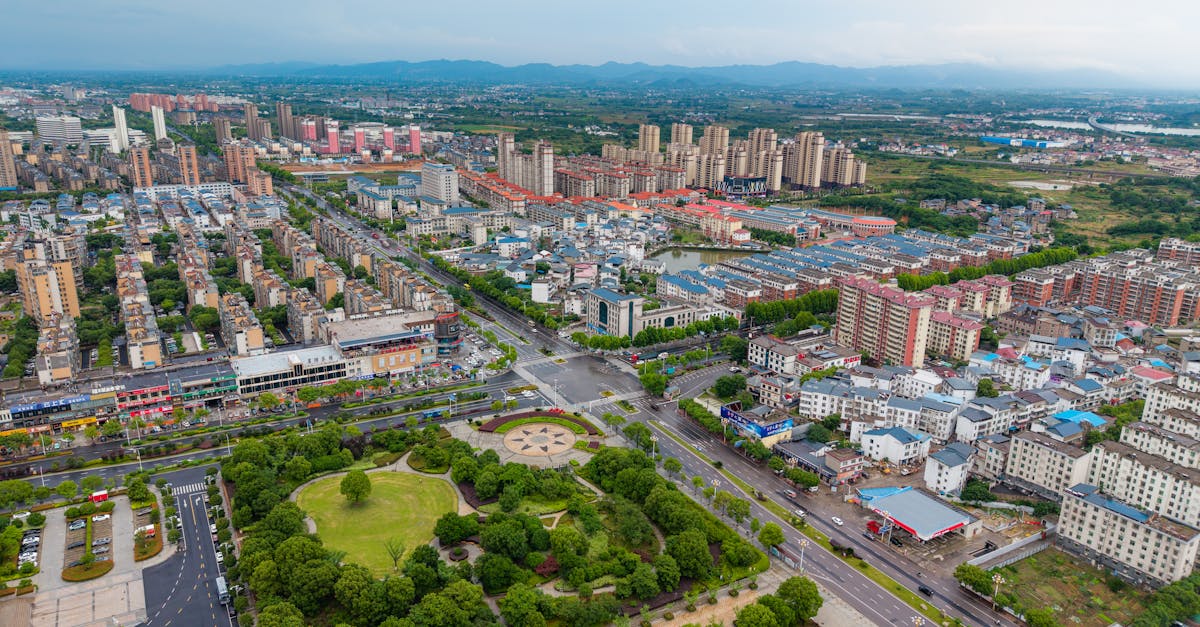
Drive west along FM 1171 on a weekday morning and you will notice something that was not there a year ago: the early geometry of a place being built from scratch. Grading equipment moves across land that stretches toward the horizon, and the sight lines — wide, flat, still largely unbroken — give little indication of how thoroughly this corner of Flower Mound is about to change. This is the leading edge of Furst Ranch, and what happens here over the next several years will reshape the southwestern identity of a town that has spent two decades carefully managing its own growth.
The Furst Ranch master-planned community covers 2,300 acres, a figure that puts it among the most significant single developments in Denton County. The project’s first retail phase, a 140-acre parcel positioned near the intersection of FM 1171 and U.S. 377, is where activity is most visible right now. Infrastructure work is slated for 2026, and by all accounts that work is actively underway as late summer turns toward fall.
For longtime Flower Mound residents, the intersection of FM 1171 and U.S. 377 carries a particular weight. It has long marked a kind of threshold — the point where the town’s denser residential fabric gives way to something more rural, more open, more uncertain. That threshold is moving. The question now is not whether development will come but what form it will take and how quickly daily life in western Flower Mound will begin to reorganize around it.
The Grocery Anchor
Perhaps the most concrete signal of the project’s momentum is a land transaction that has already closed. A large-format grocer has purchased 22.8 acres at the northeast corner of FM 1171 and U.S. 377, securing what will likely become one of the retail phase’s most prominent tenants. The identity of the grocer has not been publicly announced, but the scale of the acquisition — nearly 23 acres for a single use — indicates a significant footprint, the kind of store that tends to function as a community anchor, drawing other retail and service businesses into its orbit.
In Flower Mound, where residents have long navigated a commercial landscape concentrated primarily along FM 2499, Long Prairie Road, and the newer Lakeside and River Walk corridors, a major western grocery destination would represent a genuine shift in how the town’s geography is experienced on a weekly basis. Families living in the southwestern quadrant of Flower Mound, and in communities further west, would gain a closer option for routine errands that currently require a longer drive.
That kind of convenience matters more than it might appear on a map. Community retail anchors do not simply save driving time; they create the conditions for smaller businesses to survive nearby. Coffee shops, urgent care clinics, dry cleaners, specialty food vendors — all of them depend on the foot traffic that a grocery store reliably generates. The 22.8-acre land close is, in that sense, less a single transaction than a signal that a commercial ecosystem is beginning to take root.
Thinking at the Scale of 2,300 Acres
It is worth pausing on the full scope of Furst Ranch, because the retail activity at FM 1171 and U.S. 377 represents only the first phase of something far larger. A 2,300-acre master-planned community is not a subdivision or a strip center; it is closer in ambition to a small town within a town, one that will eventually include residential neighborhoods, open space, and a range of commercial uses that planners hope will feel cohesive rather than sprawling.
For Flower Mound, a municipality that built its identity on the idea of controlled, quality-first growth, the Furst Ranch footprint presents both opportunity and responsibility. The Town has consistently emphasized planning principles that prioritize connectivity, green space, and architectural coherence, values visible in the design of the River Walk at Central Park and in the careful buildout of the Lakeside Village area in the southeast. How those values translate to a project of this scale, on land that sits at the town’s western edge, will be a defining question for local planners and elected officials through the remainder of the decade.
Infrastructure work — the roads, utilities, drainage systems, and site preparation that make everything else possible — is the unglamorous but foundational phase of any development at this scale. The fact that it is underway in 2026 means the visible transformation of that FM 1171 corridor is not a distant prospect. It is a present-tense process, one that residents who drive that stretch regularly can already observe in the contours of freshly moved earth.
A Town Watching Two Corners at Once
Furst Ranch is not the only large-scale development shaping Flower Mound’s sense of itself right now. In the southeast, the recently completed Thirty-One Eleven Sunset residential tower in Lakeside Village signals that the town’s urban-inflected ambitions along the Lake Grapevine corridor are becoming physical reality. The Town has released video content highlighting what is already built and what is still to come in that area.
Two major developments, on opposite ends of the town, maturing in roughly the same moment: it is an unusual position for a community to occupy. Flower Mound has typically absorbed growth incrementally, one subdivision or one retail center at a time, and the planning apparatus — boards, commissions, and a long-range land use framework — has kept pace with that incremental rhythm. The convergence of Furst Ranch in the west and Lakeside Village’s continued evolution in the southeast asks something more of that apparatus, and of residents who care about how the town grows.
For now, the most immediate reality is a corner where two farm roads intersect and where, if you stop and look carefully through the heat of a late-August afternoon, you can see the early shape of something that will matter to Flower Mound for a long time.
Getting Involved
Residents who want a voice in how major developments like Furst Ranch proceed through the town’s planning and zoning process have an avenue to do so. Flower Mound’s volunteer boards and commissions — including the Planning and Zoning Commission and the Parks Board — depend on engaged residents willing to put in the work of local governance. Applications for the current cycle closed August 30, but the Town regularly opens new application windows, and staying informed about those opportunities is a straightforward way to participate in decisions that will shape the western corridor for generations.
The Flower Mound Insider
The latest local openings, reviews, and weekend events — delivered to your inbox.