Art With a Purpose: Charice Cooper's Animal Paintings Ask Flower Mound to Look Closer
Local artist Charice Cooper displays her wildlife-inspired paintings at Flower Mound Town Hall through September, blending realism and conservation.
A Canvas That Asks Something of the Viewer
The lobby of Flower Mound Town Hall, at 2121 Cross Timbers Road, is not a place most residents linger. You come in, handle your business, and leave. But through the end of September, something on the walls has been slowing people down. Local artist Charice Cooper has filled the Art Display Walls with a collection of animal paintings that straddle two worlds at once — the precise and the poetic, the observed and the felt.
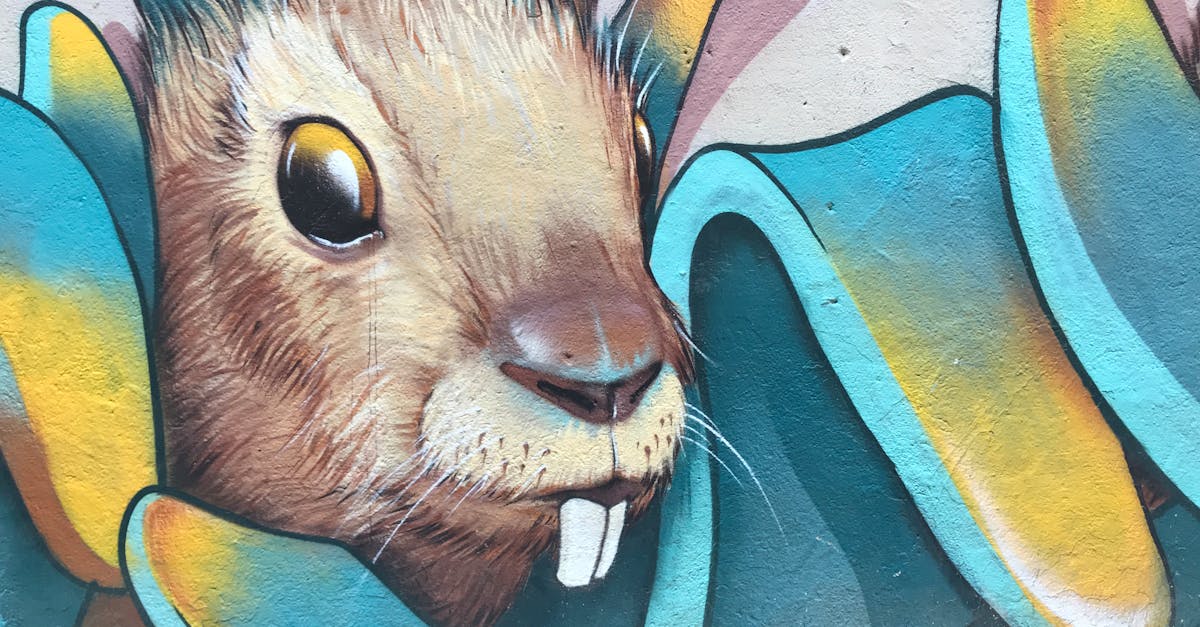
Cooper works in a style she has developed at the intersection of contemporary realism and impressionism. The result is paintings that carry the weight of a careful observer — you can see that she has spent real time with her subjects — while also breathing with something looser, more atmospheric. A feather catches light in a way that feels both accurate and dreamlike. A pair of eyes belonging to some creature looks back with more interiority than a photograph might capture. It is the kind of work that rewards the few extra seconds most people do not give it.
And Cooper is not simply making beautiful objects. She has described her work as a catalyst for wildlife conservation, using the gallery wall as a place to start a conversation that goes beyond aesthetics.
Why Town Hall, and Why Now
Flower Mound has quietly built a modest but meaningful infrastructure for exhibiting local artists in civic spaces. The Town Hall art display walls have hosted rotating exhibitions for years, giving working artists from within the community a venue that is, by its nature, open to everyone — no admission, no appointment, no gallery-world gatekeeping. You walk in off Cross Timbers Road, and there is the work.
For an artist whose stated purpose is conservation advocacy, that kind of access matters. Cooper is not preaching to an already-converted audience of gallery patrons who arrived specifically to engage with wildlife art. She is reaching the person who came in to renew a permit or attend a public meeting, who might not have sought this out on their own. That friction — or rather, the removal of it — is exactly what civic art spaces are designed to create.
The Town’s art programming through the display walls reflects a broader belief that culture does not have to be siloed into dedicated arts districts to function. Flower Mound is a community built largely around single-family neighborhoods, school campuses, and suburban commerce. Slipping a serious artist’s work into the municipal building where residents intersect with local government is a small but deliberate act of integration.
Contemporary Realism Meets Impressionism
Cooper’s stylistic blend deserves a closer look, because it is not a casual description. Contemporary realism, in the art world, refers to figurative work grounded in observable reality — the artist is committed to representing the physical world as it actually appears, with attention to anatomy, light, and proportion. Impressionism, of course, carries a different set of commitments: the primacy of light and atmosphere, the loosening of hard edges, the suggestion of movement and feeling over strict accuracy.
Holding both at once is harder than it sounds. Many artists lean fully one direction or the other. Cooper’s choice to work in the space between them means that her animal subjects are recognizable — you know what you are looking at — but they are also alive in a way that pure realism sometimes struggles to achieve. The impressionist influence gives the work breath. The realist foundation gives it credibility.
For wildlife subjects in particular, this combination seems especially apt. Animals in nature are not static. They are caught in motion, half-hidden by environment, lit by conditions that change by the minute. A style that can honor both the factual animal and the experiential animal — the one you see with your eyes and the one you feel with something harder to name — suits the subject in ways that a purely documentary approach might not.
Conservation Through the Gallery Wall
The notion of art as a catalyst for conservation is not new, but it remains underused. Photography has long played a role in environmental advocacy — the image of a suffering animal or a degraded habitat can move people in ways that statistics cannot. Painting operates differently. It is slower. It asks the viewer to accept the mediation of a human hand and sensibility between themselves and the subject. In some ways, that is more honest: this is how this artist sees this creature, and what she sees is worth your attention.
Cooper’s framing of her own work as a catalyst is precise language. A catalyst does not complete the reaction — it enables it. The painting does not save a species. It might, if it works, leave a residue of feeling in a viewer who will later read a news story about habitat loss and find, somewhere, a small personal stake in the outcome. That is a modest claim, but it is also a realistic one, and it respects the intelligence of the audience.
For Flower Mound residents who pass through Town Hall in the weeks remaining in September, the exhibition offers something relatively rare in the rhythms of suburban daily life: a moment of genuine encounter with the natural world, refracted through the particular vision of a local artist who has made that world her life’s subject.
A September Worth Stepping Inside For
The display runs only through the end of September, which at this point in the month means the window is narrowing. Town Hall at 2121 Cross Timbers Road keeps regular municipal hours, and the art is visible in common areas — no special event, no ticket, no scheduled opening required. You simply have to walk in.
Flower Mound is having a full September by any measure. There are outdoor movie nights at Heritage Park, a community camp-out at Twin Coves Park, a health fair at the Senior Center, and a triptych collaboration by three painters on display at the public library on Broadmoor Lane. The calendar reflects a community that is active and engaged. Cooper’s exhibition at Town Hall is quieter than most of what is happening this month, but quieter is not lesser. Sometimes the most important thing in the room is the one you almost walked past.
The paintings are there. The question Cooper’s work seems to pose — to anyone who pauses long enough to receive it — is whether the animals she has spent her career observing and rendering will still be there for the next generation of artists to find.
The Flower Mound Insider
The latest local openings, reviews, and weekend events — delivered to your inbox.